Financial literacy for displaced Ukrainians starting over.
Free finance bootcamps and two training videos, one in Ukrainian and one in English, on the financial system displaced Ukrainian families have to learn from scratch.
Student-founded, student-run. Everything we make is free, and always will be.
Impact
3,000+
Ukrainians reached
Savings
200+
opened their first savings account
Emergency funds
400+
built an emergency fund
U.S. chapters
3
Texas, New Jersey, Georgia
Views
10,000+
on our bilingual training videos
Raised
$1,500+
goes into funding our activities
Savings and emergency-fund figures from participant surveys.
Our mission
To give every displaced Ukrainian financial knowledge about the system they now live in, free of charge, for as long as it takes.
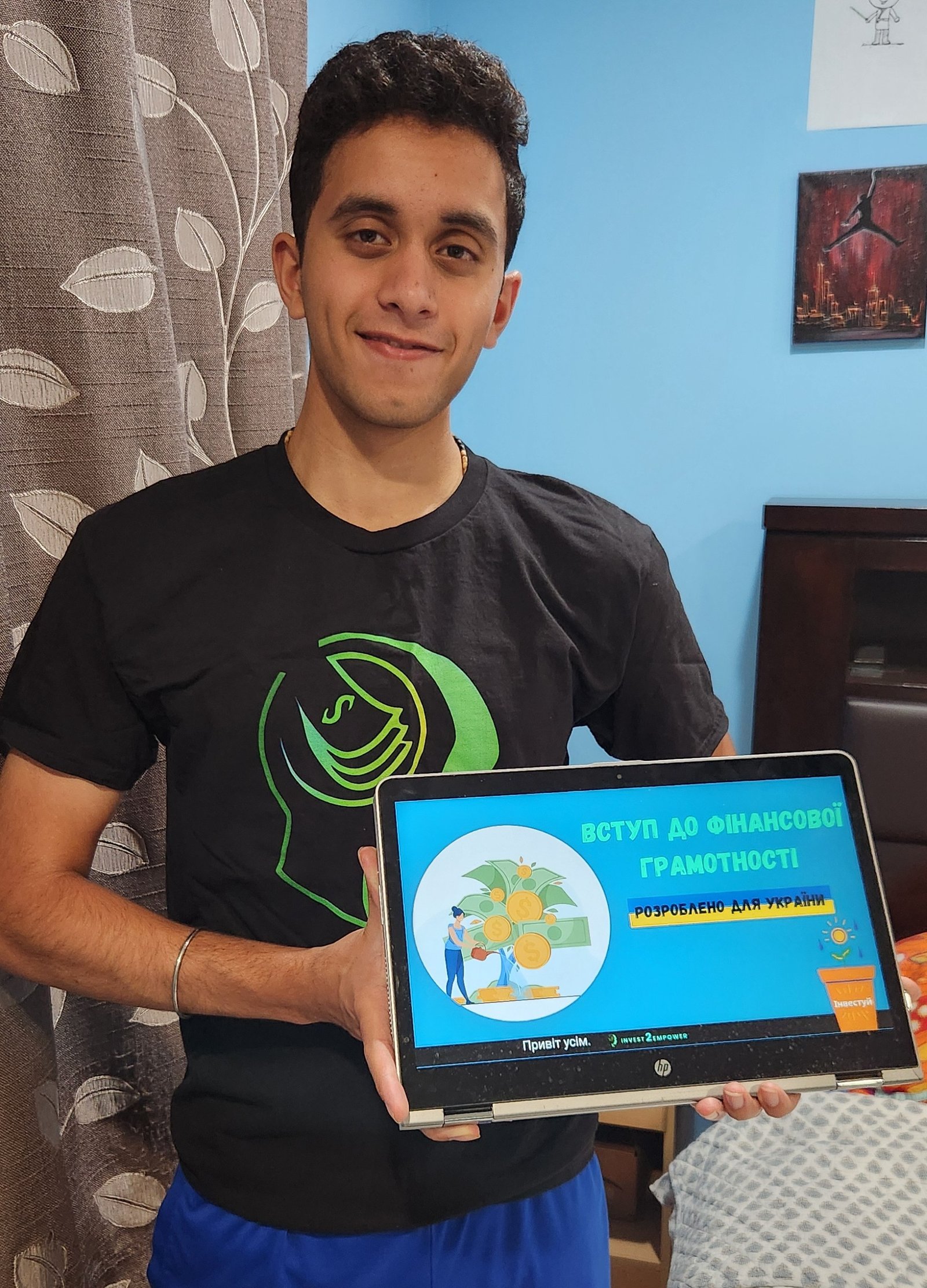
Three years ago I signed up to volunteer with ENGin, which pairs Ukrainian students with English-speaking volunteers. I expected to teach English. Mostly I listened. My students talked about planning a life when the currency, the job market and the electricity were all uncertain, and when their families might have to start over in a country whose financial system nobody had explained to them.
The same questions came up week after week. Where do I put money so the war does not eat it? Is a deposit safe? If we leave, how does any of this work over there? These were not questions about arithmetic. They were questions nobody had answered, for students who had every reason to be asking them.
We are the sons of immigrant parents, so the second half was already familiar. We had watched our own families struggle with an unfamiliar system and get taken in by scams. They were smart and they worked hard. Nobody had given them the information they needed. A displaced family should not have to learn a new financial system in a language they are still learning.
So we built one course on the system they now live in: bank accounts, credit scores, paychecks and taxes. We recorded it twice, once in Ukrainian and once in English, and brought it to displaced Ukrainians in free bootcamps. It is free, self-paced and open to anyone. There is no fee, no account, and no waiting for a school to adopt it.
- Aditya Herekar, Co-founder
Why it matters
Young people score lowest in both countries
Teenagers and young adults have the lowest financial literacy in Ukraine and in the country where many displaced families now live. A displaced family runs into both gaps at once.
46.6%
correct answers among 10th-graders
The first national study of financial literacy among Ukrainian schoolchildren found only a basic level: a 3 on the 12-point school scale.
NBU & Junior Achievement Ukraine, 2024
12.3/21
national score, below the OECD minimum of 14
58% of the maximum. Adults aged 18–19 scored lowest of every age group, at 10.1.
NBU / USAID nationwide survey, 2021
38%
among Gen Z, the weakest of any generation
U.S. adults overall answered 47% of the 28 index questions correctly in 2026, the lowest in the survey's ten-year history.
TIAA Institute–GFLEC P-Fin Index, 2026
$100k
lifetime benefit per student, from one course
A single semester of personal finance is worth about $100,000 over a lifetime, mostly from avoiding high-interest debt and getting better rates on loans, insurance and a mortgage. Our course costs nothing.
Tyton Partners & Next Gen Personal Finance, 2024
Built with Ukrainian students
Our courses grew out of years of weekly conversations with Ukrainian teenagers through ENGin, the nonprofit pairing Ukrainian learners with English-speaking volunteers. Aditya has volunteered with ENGin for more than three years, and our work was featured in ENGin's volunteer newsletter.
Those conversations are why the course is in Ukrainian as well as English. Families can learn their new financial system in the language they think in.

On the official TEDx channel
A TEDx talk about one Ukrainian student
The idea for Invest2Empower was born through one such conversation.
The two courses
Pick your language
Roughly 30 minutes each · free on YouTube
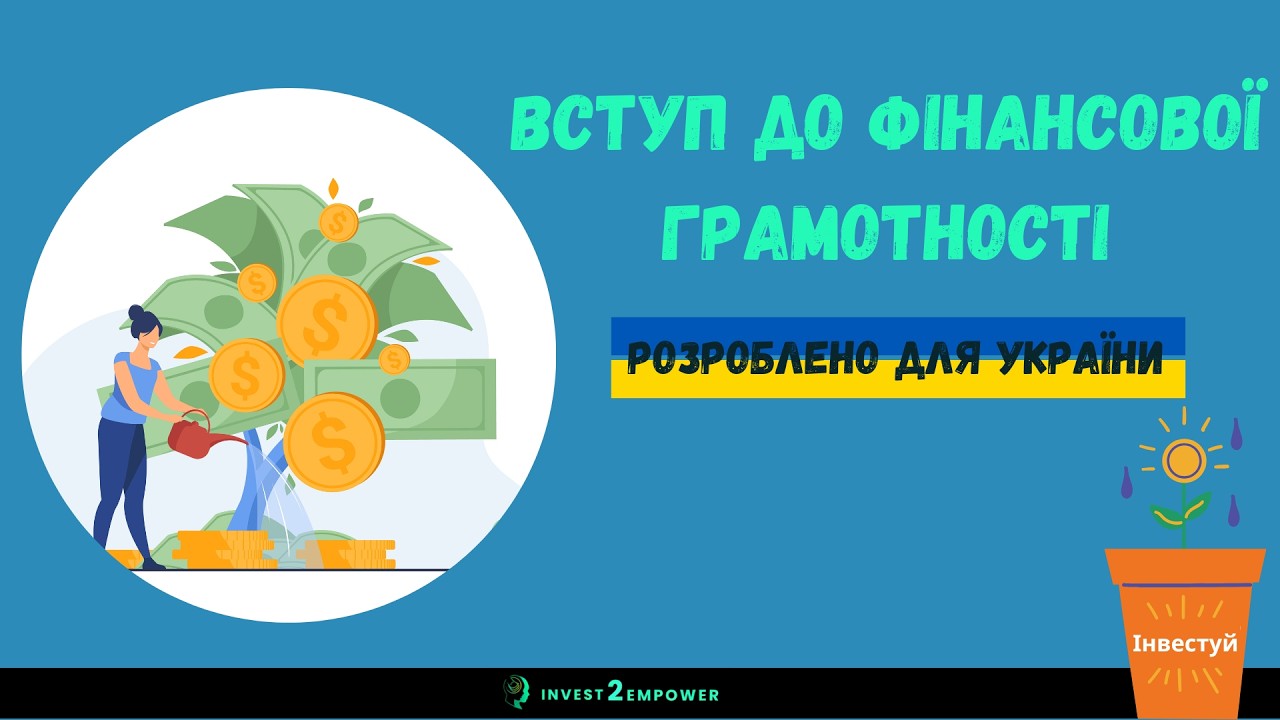
From zero, in Ukrainian
For Ukrainian speakers · ~30 min
A new financial system explained in Ukrainian, for displaced families who would rather learn in their own language.
- 01 Budgeting and spending
- 02 Bank accounts, credit, interest
- 03 Saving and protecting your money
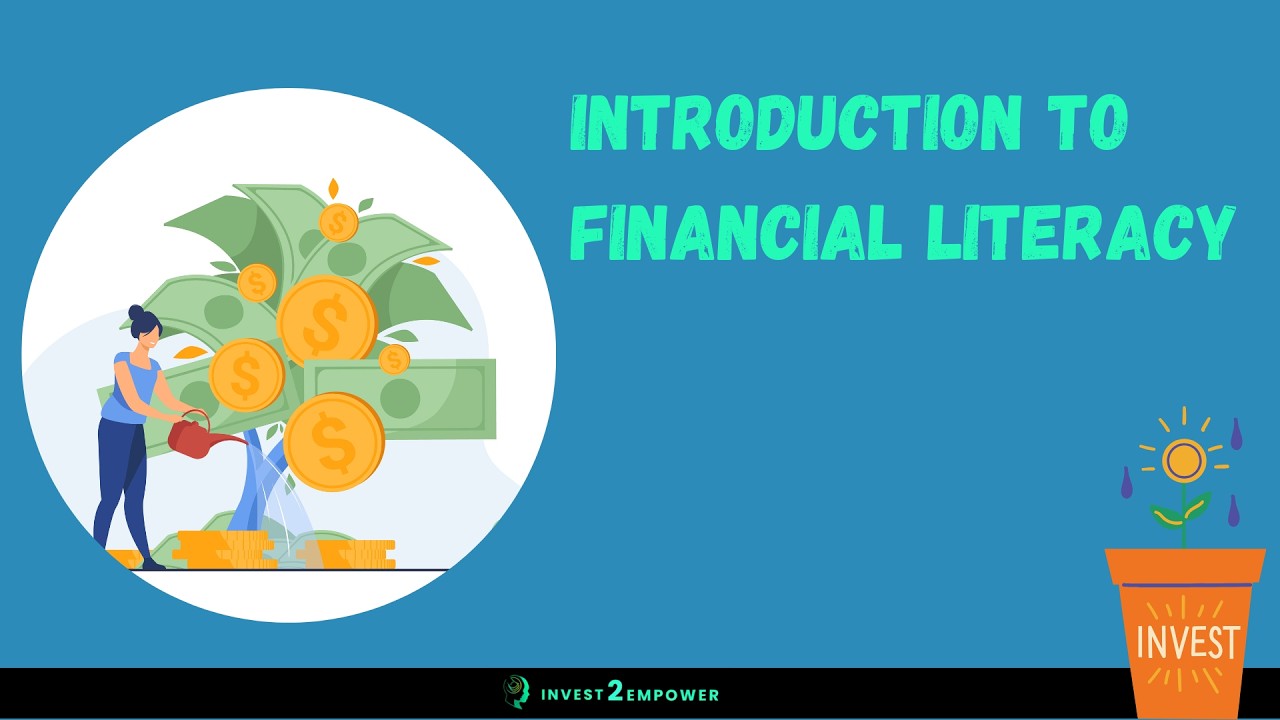
From zero, in English
The same lessons in English. It covers what schools rarely teach and what nobody explains to a family that just arrived.
- 01 Credit scores and building credit
- 02 Bank accounts, taxes, paychecks
- 03 Saving, investing, avoiding scams
What learners say
Reviews from our bootcamps

Hear it from a school authority
A church school principal talks about what she thinks about the workshops.
“An investment in knowledge pays the best interest.”
Benjamin Franklin